
A New Sound of Hope: India’s First Dual-Ear Implant With KANSO 3 and Immediate Switch-On | Dr. Sanjeev Mohanty, MGM Health Care

A New Sound of Hope: India’s First Surgery Helps Patient Hear Again After Years of Silence
Advanced wireless KANSO 3 technology enabled immediate hearing after a rare dual-ear implant surgery
Landmark Hearing Breakthrough in India
In a historic achievement for Indian hearing care, Dr.Sanjeev Mohanty, senior ENT and cochlear implant specialist, successfully performed India’s first simultaneous bilateral cochlear implantation using advanced wireless KANSO 3 technology for a patient diagnosed with Auditory Neuropathy Spectrum Disorder at MGM Health Care, Chennai.
What makes this surgery extraordinary is that both ears were implanted at the same time, and the speech processor was switched on immediately in the recovery room, allowing the patient to hear sounds for the first time after a long period of auditory deprivation.
This milestone marks a significant advancement in the management of complex hearing disorders in India.

Why This Medical Breakthrough Matters
Auditory Neuropathy Spectrum Disorder, often called ANSD, is a rare hearing condition in which sound reaches the inner ear, but the signals do not travel properly to the brain. This makes speech understanding extremely difficult, even if the ear appears structurally normal.
Cochlear implantation in ANSD patients is challenging because outcomes depend heavily on precise timing, neural responsiveness, and early stimulation. Performing implantation in both ears simultaneously is even more complex and is rarely attempted due to surgical, neurological, and rehabilitation challenges.
Adding to this complexity, the immediate activation of the implant after surgery is uncommon and requires advanced technology, surgical confidence, and strong multidisciplinary support.
Why Simultaneous Dual-Ear Implantation Is Rare
Most cochlear implant surgeries are performed on one ear at a time, with the second ear implanted months or years later. Simultaneous bilateral implantation demands longer surgery time, careful neural monitoring, and advanced postoperative coordination.
In patients with long-standing auditory deprivation, the brain’s ability to interpret sound reduces over time. Immediate stimulation plays a crucial role in reactivating neural pathways. This makes early switch-on both technically demanding and clinically significant.
Achieving this in a patient with ANSD places the surgery among the most complex hearing procedures performed today.

A Historic First for Indian Hearing Care
This procedure is considered the first of its kind in India to combine:
Simultaneous bilateral cochlear implantation
Advanced wireless off-the-ear speech processor technology
Immediate post-operative switch-on
A confirmed hearing response in the recovery phase
The success of this surgery demonstrates that complex hearing disorders can be managed with precision, innovation, and early intervention when the right expertise and infrastructure come together.

The Human Impact Behind the Medical Achievement
Beyond the medical milestone lies a deeply human story.
The patient had lived with prolonged auditory deprivation, experiencing a world largely without sound.
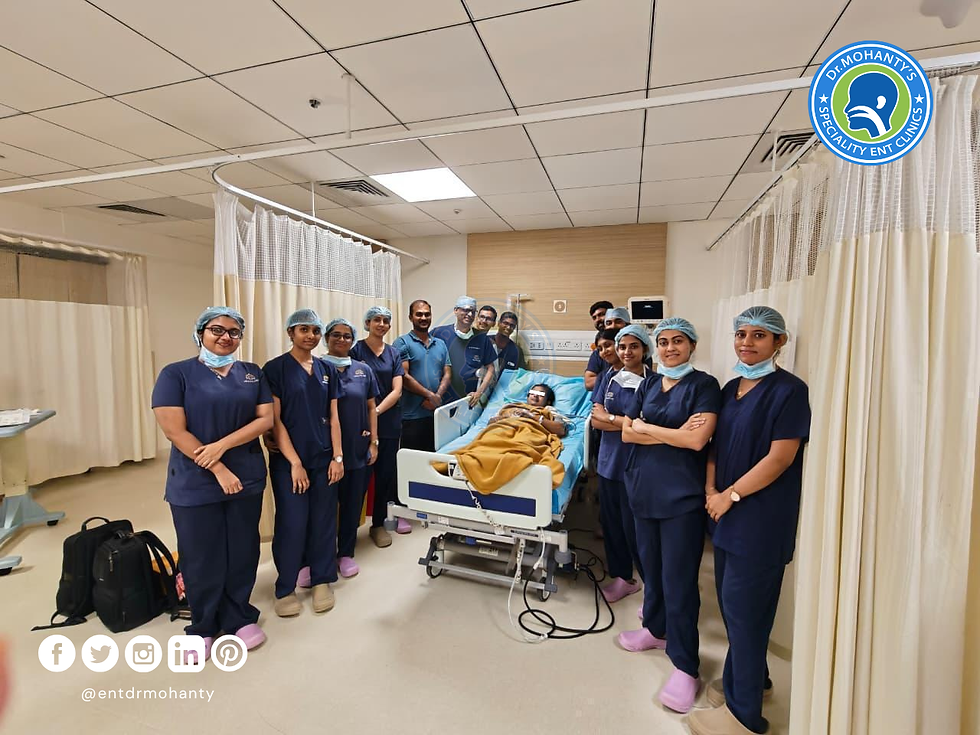
When the speech processor was activated shortly after surgery, the patient responded to sound, marking a powerful emotional moment for the family and medical team. For the patient, this moment represented not just hearing, but the beginning of reconnecting with voices, environment, and everyday life.
Such outcomes reinforce the life-changing potential of timely and well-executed hearing interventions.
Expert Insight
“This procedure represents a significant step forward in the treatment of complex hearing disorders,” said Dr. Sanjeev Mohanty.
“Early auditory stimulation is critical, especially in conditions like Auditory Neuropathy Spectrum Disorder. The ability to achieve hearing response immediately after surgery highlights the importance of technology, timing, and a carefully coordinated surgical approach.”

Understanding the Role of KANSO 3 Technology
The surgery utilized KANSO 3, an advanced wireless speech processor designed to sit comfortably off the ear. Unlike conventional devices, this technology allows:
Early auditory stimulation
Improved comfort and cosmetic acceptance
Faster adaptation to sound
Simplified rehabilitation, especially in bilateral implantation
Its wireless design supports early activation and continuous auditory input, which is especially beneficial in patients with long periods of sound deprivation.
About MGM Health Care, Chennai
The procedure was performed at MGM Health Care, Chennai, a tertiary care center known for advanced ENT services, cochlear implant programs, and multidisciplinary surgical support. The hospital’s infrastructure, audiology services, anesthesia team, and rehabilitation specialists played a critical role in enabling the success of this complex procedure.
Such achievements reflect the growing capability of Indian healthcare institutions to deliver globally comparable outcomes.
What This Means for Future Patients
This breakthrough offers renewed hope for:
Children and adults with Auditory Neuropathy Spectrum Disorder
Patients with long-standing hearing loss
Families seeking advanced hearing solutions in India
It highlights the importance of early diagnosis, timely intervention, and access to advanced technology. As awareness increases, more patients may benefit from life-changing hearing restoration procedures without long delays.
Raising Awareness About Early Hearing Intervention
Hearing loss, especially in complex neurological conditions, often goes underdiagnosed or untreated. This milestone emphasizes the need for:
Early hearing screening
Timely referral to specialists
Awareness among parents and caregivers
Access to advanced implant technology
Early action can significantly improve speech development, social integration, and quality of life.
Frequently Asked Questions
What is Auditory Neuropathy Spectrum Disorder?
It is a hearing condition where sound enters the ear but is not transmitted properly to the brain, making speech understanding difficult.
What is a cochlear implant?
A cochlear implant is an electronic hearing device that bypasses damaged parts of the ear and directly stimulates the auditory nerve.
Why is immediate switch-on important?
Early activation helps stimulate the brain’s hearing pathways sooner, improving adaptation and outcomes, especially after long periods of hearing loss.
A Step Forward for Hearing Care in India
This landmark surgery stands as a symbol of progress in Indian medical science, combining expertise, innovation, and compassion. It opens new possibilities for patients who once believed hearing restoration was out of reach.

Follow Us:
1. Facebook: www.facebook.com/entdrmohanty
2. Instagram: www.instagram.com/entdrmohanty
3. Blog: www.drmohantyss.blogspot.com
4. X: www.x.com/entdrmohanty
5. LinkedIn: www.linkedin.com/company/entdrmohanty
6. Website: www.drsanjeevmohanty.com
7. YouTube: www.youtube.com/@entdrmohanty


Comments