
Diwali Smoke and Your Throat, Nose and Ears: What I Tell My Patients Every Year

Every year, a week or two after Diwali, my clinic fills up with the same complaints. A cough that refuses to leave. A throat that feels like sandpaper. A child who cannot hear properly after a night with the crackers. Most people tell me, "Doctor, it is just the smoke, it will go." Sometimes it does. Sometimes it does not, and that is exactly when it needs a proper look.
What the smoke really does
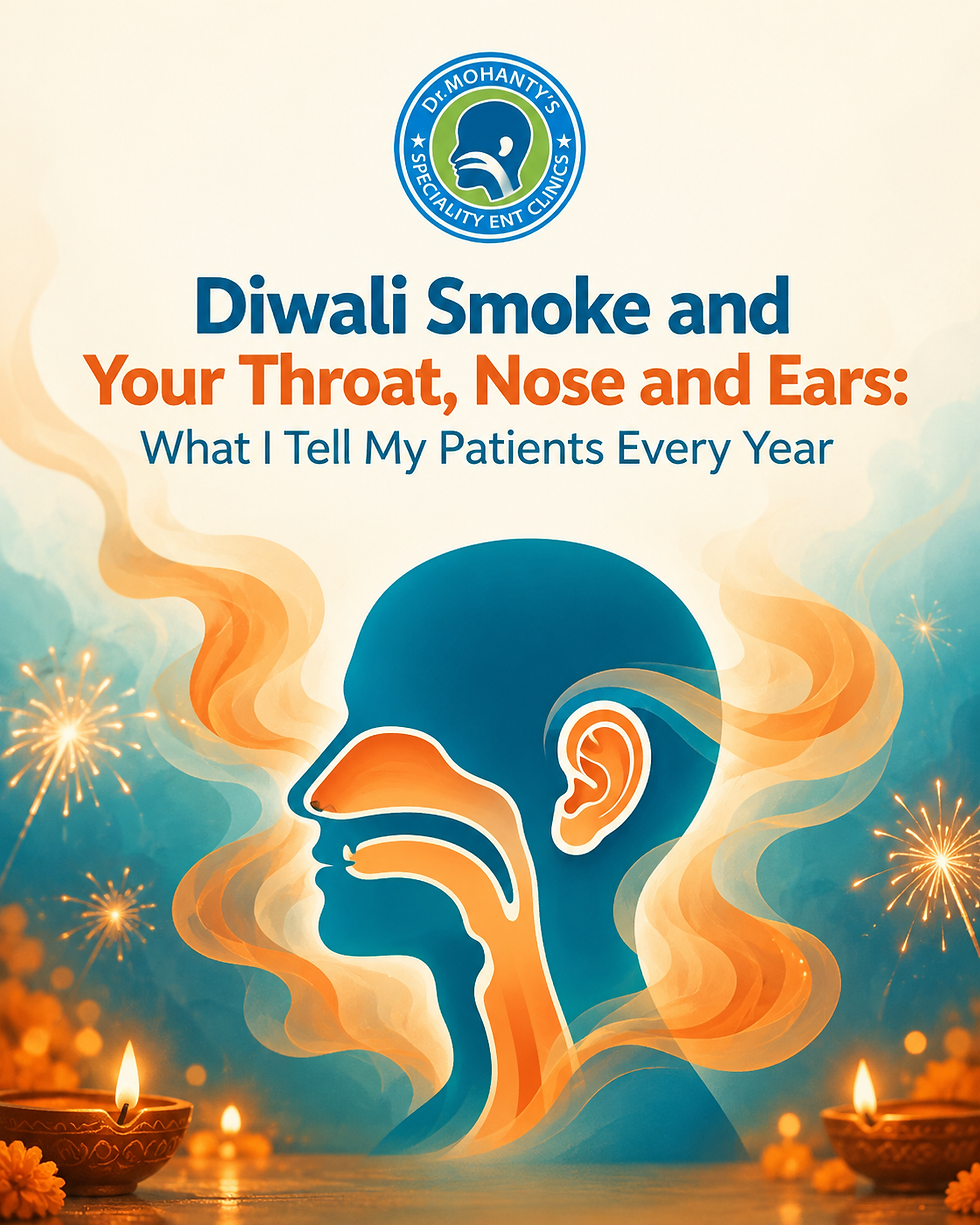
Cracker smoke, and the haze that hangs in the air long after, carries tiny particles and irritating gases. Your nose and throat are the first filter, so they take the hit. When the lining gets irritated again and again, it swells and makes extra mucus. That is why people end up with a blocked nose, scratchy throat, post-nasal drip and a dry cough, all together. If you already have allergies, sinus trouble or asthma, you will feel it sooner and harder.
The ear problem nobody talks about
A very loud cracker going off close to the ear can injure hearing in a split second. I see patients who come in with a ringing sound in the ear, a blocked feeling, or muffled hearing. In some cases the eardrum itself is torn. Children are the most at risk because they stand close, and they do not always tell their parents that something feels wrong.

What actually helps
- Check the air quality (AQI) in your area. On bad days, keep windows shut and stay indoors, especially at night and early morning when smoke settles.
- If you must step out, wear a well-fitted N95 type mask. A loose cloth mask does very little against fine smoke.
- Sip warm water through the day and use plain saline nasal spray or rinse to wash out irritants.
- Keep children well away from loud crackers. If you are lighting them, use ear muffs. Cotton in the ear gives almost no protection.
- After a loud bang near the ear, do not put oil, drops or any home remedy inside. Keep the ear dry and get it checked.
When you should see an ENT specialist
- Ringing or reduced hearing that does not settle within a day
- Ear pain, bleeding or discharge after a cracker burst
- A cough or throat irritation lasting more than two weeks
- Fever with pain around the cheeks or forehead
- Repeated nosebleeds. And if there is difficulty in breathing, please go to the nearest emergency room right away.
This article is for general awareness and is not a replacement for a medical consultation.

Follow Us:


Comments